.svg)


Cocaine withdrawal refers to the range of symptoms that occur when someone who has been using cocaine regularly stops or significantly reduces their use.
Unlike withdrawal from alcohol or opioids, cocaine withdrawal is primarily psychological—but that doesn’t make it any less challenging. The emotional and mental symptoms can be difficult, especially in early recovery.
Below, we detail what to expect—the phases, the symptoms, and the timeline—to help you prepare for what’s ahead and recognize when professional support is needed.
_______________________________________________________
What Happens to Your Body When You Quit Cocaine?
Cocaine produces its euphoric effects by flooding the brain with dopamine, a neurotransmitter associated with pleasure and reward. With repeated use, the brain adapts to this artificial dopamine surge by reducing its natural dopamine production and decreasing the sensitivity of dopamine receptors. In turn, the brain becomes dependent on cocaine to feel “normal.”
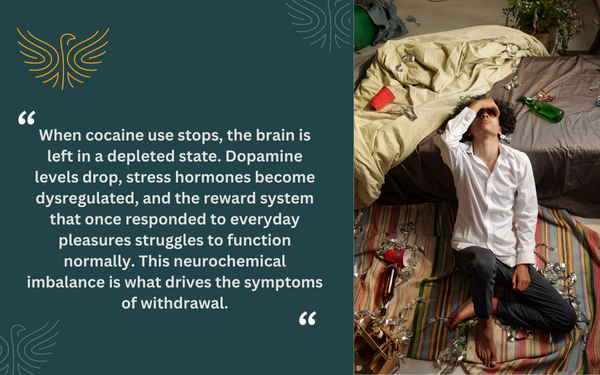
When cocaine use stops, the brain is left in a depleted state. Dopamine levels drop, stress hormones become dysregulated, and the reward system that once responded to everyday pleasures struggles to function normally. This neurochemical imbalance is what drives the symptoms of withdrawal.
The good news is that the brain is remarkably adaptable. Given time and the right support, dopamine pathways begin to heal, and normal function gradually returns. Withdrawal follows a predictable progression as this healing unfolds, typically moving through three distinct phases.
Phase 1: The Crash (First 24-72 Hours)
The crash begins within hours of the last dose and represents the body’s immediate response to the sudden absence of cocaine. Dopamine levels plummet, and the stimulant-driven energy that characterized use gives way to profound exhaustion.
During this phase, people commonly experience intense fatigue, increased appetite, irritability, anxiety, and restlessness. Many find themselves sleeping for extended periods—sometimes 12 hours or more—as the body attempts to recover from the sleep deprivation that often accompanies active cocaine use. Thinking may feel slowed or foggy.
Phase 2: Acute Withdrawal (1-2 Weeks)
Once the initial crash subsides, acute withdrawal begins. This phase is marked by the peak of psychological symptoms and is often the most difficult period to navigate.
Cravings become more intense and persistent. Depression is common, sometimes severe, as the brain continues operating with depleted dopamine. Mood swings, irritability, and emotional volatility make daily life feel overwhelming.
Sleep disturbances may also emerge—insomnia, disrupted sleep patterns, and vivid or disturbing dreams that can leave people feeling unrested even after a full night in bed.
This is the highest-risk period for relapse. The combination of intense cravings, low mood, and the memory of how quickly cocaine could provide relief creates a powerful pull back toward use. Thus, having support systems and strategies in place before entering this phase can make a big difference.
Phase 3: Post-Acute Withdrawal (Weeks to Months)
For many people, symptoms don’t simply disappear after the first two weeks. Post-acute withdrawal syndrome (PAWS) can persist for weeks or even months, though symptoms are generally less intense than during the acute phase.
Lingering symptoms may include emotional flatness, low motivation, occasional cravings triggered by stress or environmental cues, and ongoing sleep disruption. But rest assured that this is a normal part of the brain’s recalibration process—dopamine systems that were dysregulated by cocaine use need time to fully restore normal function.
At the same time, the timeline for this phase varies considerably from person to person. Factors like overall health, length and severity of use, and the presence of co-occurring mental health conditions all influence how long extended withdrawal lasts.
_______________________________________________________
Common Symptoms of Cocaine Withdrawal
Cocaine withdrawal affects psychological, physical, and behavioral functioning. Most people experience a mix of symptoms, even if not every symptom applies. These may include:
- Intense cravings for cocaine
- Anxiety, irritability, or agitation
- Depression or low mood
- Restlessness
- Reduced ability to feel pleasure (anhedonia)
- Fatigue
- Increased appetite
- Slowed movements or reactions
- Muscle aches
- Sleep disturbances or insomnia
- Vivid or unsettling dreams
- Social withdrawal
- Difficulty concentrating
- Low motivation
- Impulsiveness
_______________________________________________________
Managing Cocaine Withdrawal Safely
Managing cocaine withdrawal is most effective with the right mix of support, structure, and evidence-based care. While cocaine withdrawal isn’t typically medically dangerous, professional guidance can make the process safer and more manageable. Medical and mental health providers can monitor symptoms, address co-occurring conditions, help stabilize mood, and reduce the risk of relapse during the most vulnerable stages.
In fact, several evidence-based therapies have been shown to help people manage withdrawal and build long-term recovery skills, such as:
- Cognitive Behavioral Therapy (CBT)
- Motivational Interviewing (MI)
- Group or peer-based support programs
- Trauma-informed therapy (if relevant)
- Relapse-prevention or skills-based programs
Overall, a person’s treatment plan varies based on their unique circumstances and the underlying factors that contributed to their cocaine use. As such, your treatment may include all or some of the above, as well as other therapies.
_______________________________________________________
When to Get Help
Suicidal thoughts, overwhelming depression, hallucinations, extreme agitation, or being unable to sleep for several days should be evaluated by a professional right away—contacting emergency services or a crisis hotline like 988 can be lifesaving.
If relapse occurs, reaching out for help is essential. There is no shame in needing support; asking for help is a sign of awareness and self-protection.
And you don’t have to do this alone. At Freedom Recovery Centers (FRC), our compassionate team can help you navigate the difficult phases of cocaine withdrawal and recovery. Whether it’s your first or last time in rehab, we’re here to support you. Call us today at 804-635-3746.

.svg)


.svg)


.svg)