.svg)





Dating is nerve-wracking for just about everyone. But when you’re in recovery, there’s an extra layer of complexity; at some point, you need to tell the person you’re seeing that you’re recovering from addiction. So, when do you bring it up? How much do you share? What if they react badly?
You might worry about being judged or rejected. You might wonder whether your past will define how others see you. But the right person will respect your honesty and admire your strength. Recovery is nothing to be ashamed of—it’s something to be proud of.
Learning how to navigate these conversations is part of building a healthy life in sobriety. With the right approach, you can date with confidence while protecting both your heart and your recovery.
_______________________________________________________
When Should You Disclose You’re in Recovery?
There’s no perfect time for when to tell someone you’re in recovery. Every situation is different, and ultimately, the timing should feel right to you. That said, most people find that the second or third date is a natural time to have this conversation.
The first date is really about figuring out if there’s any connection at all. You’re learning basic things about each other—interests, sense of humor, and whether you enjoy each other’s company. It’s usually too early to dive into deeply personal topics. You don’t owe someone your life story before you’ve even decided if you want to see them again.
By the second or third date, though, things start to shift. If you’re still interested in each other, you’re beginning to build something. This is when deeper conversations naturally begin—about values, past experiences, and what you’re looking for. Disclosing your recovery at this stage allows you to be honest before things get too serious, while also ensuring you’re sharing with someone who’s shown genuine interest in getting to know you.
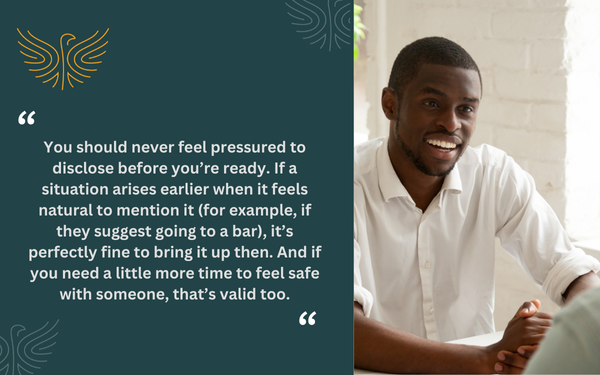
Yet, the most important factor isn’t the date number—it’s your comfort level. You should never feel pressured to disclose before you’re ready. If a situation arises earlier when it feels natural to mention it (for example, if they suggest going to a bar), it’s perfectly fine to bring it up then. And if you need a little more time to feel safe with someone, that’s valid too.
Trust your instincts. If someone feels trustworthy and the moment feels right, that’s your green light. And remember: how someone responds to your honesty tells you a lot about whether they’re worth your time.
You also get to decide how much detail to share. Early on, you don’t need to recount your entire history with addiction. A simple, honest statement is enough: “I'm in recovery, so I don’t drink” or “I’ve been sober for a couple of years and it’s an important part of my life.” You can share more as the relationship develops and trust deepens. Disclosure isn’t all-or-nothing—it’s a process that unfolds over time.
_______________________________________________________
Tips for Dating in Recovery
When you’re not numbing yourself with substances, you get to experience genuine connection. Thus, recovery can offer a time where you explore deeper relationships and connections, which can support you along the way and offer meaning in your life. So, here are some tips to help you date with intention and protect your recovery along the way.
1. Be Honest and Transparent
Honesty is the foundation of any healthy relationship, and it starts from the very beginning. You don’t need to over-explain or apologize for your recovery, but being upfront about who you are sets the tone for authenticity. If someone can’t handle your truth, they’re not the right person for you—and it’s better to find that out early.
Being honest also means being truthful with yourself. Check in regularly about how dating is affecting your emotional state and your sobriety. If something doesn’t feel right, honor that feeling.
2. Prioritize Your Recovery
Your sobriety has to come first—before any relationship. This might mean saying no to dates at bars or clubs, skipping events where you know there will be heavy drinking, or taking a step back from dating if you’re going through a difficult time in recovery.
The right partner will understand and support your priorities. If someone pressures you to compromise your sobriety or doesn’t take your recovery seriously, that’s a major red flag. A relationship that threatens your sobriety isn’t worth having.
3. Take Things Slow
In recovery, you’re learning how to experience emotions without numbing them. This can make new relationships feel especially intense. It’s easy to get swept up in excitement and move faster than you should.
Give yourself permission to take things slow. There’s no rush to define the relationship, meet each other's families, or make big commitments. Taking your time allows you to build a solid foundation and make sure this person is truly a good fit for your life in recovery.
4. Choose Sober-Friendly Dates
Dating doesn’t have to revolve around drinking. Get creative with date ideas that avoid uncomfortable situations. Go for a hike, visit a museum, try a new restaurant, take a cooking class, or explore a farmer’s market together. These activities give you the chance to actually talk and connect.
If your date suggests something that doesn’t feel safe for your recovery, it’s okay to suggest an alternative. Someone who’s interested in you will be happy to do something different.
5. Know Your Worth
Recovery has taught you things about yourself that many people never learn. You’ve faced hard truths, done difficult work, and come out stronger. That takes courage and resilience. Don’t let anyone make you feel like your past defines you or diminishes your value.
You deserve a partner who sees your recovery as a strength. The right person will be proud of how far you've come.
6. Lean on Your Support System
Dating can bring up a lot of emotions—excitement, anxiety, hope, fear. Don’t try to navigate it all alone. Talk to your sponsor, therapist, or trusted friends in recovery about what you’re experiencing. They can offer perspective, encouragement, and accountability.
Your support system can also help you spot red flags you might miss when you’re caught up in the excitement of a new connection. Sometimes an outside perspective is exactly what you need.
7. Be Patient with Yourself
Dating in recovery is a learning experience. You might make mistakes, choose the wrong person, or have awkward conversations. This is all part of the process. What matters is that you keep showing up with honesty and self-respect.
Be patient and kind with yourself as you figure this out. You’re building a new life, and that includes learning how to have healthy, sober relationships. It takes time, but it’s worth it.
_______________________________________________________
Build a Life You Love in Recovery
Dating is just one part of creating a fulfilling sober life. Whether you’re navigating new relationships or working on yourself, having the right support makes all the difference.
Freedom Recovery Centers (FRC) is here to help you build a strong foundation for lasting recovery. Our compassionate team understands the challenges you face and is ready to support you every step of the way. Call us today at 804-635-3746 to learn more.

.svg)


.svg)


.svg)