.svg)





Recovery is hard work, and staying sober requires ongoing effort, commitment, and support. But even when you’re doing everything right—attending meetings, working with a therapist, or building healthy habits—life has a way of throwing curveballs. Bills pile up. Relationships get complicated. Work demands feel endless. And before you know it, stress becomes a constant companion.
For many people in recovery, chronic stress can be a serious threat to their sobriety. Yet, getting ahead of the game and understanding why it arises and how to limit it can ensure you stay on track toward your recovery goals. So, let’s take a closer look!
_______________________________________________________
How Does Stress Cause Relapse?
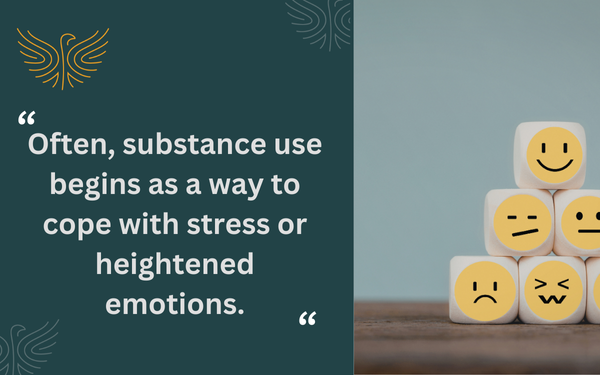
Often, substance use begins as a way to cope with stress or heightened emotions. When this coping mechanism is removed, the underlying vulnerability to stress remains—and without healthy tools to manage it, the pull toward old habits can feel overwhelming. In more detail, here’s how chronic stress can increase the risk of relapse.
Stress Rewires the Brain
Chronic stress physically changes the brain in ways that make relapse more likely. When you’re under constant pressure, your brain produces elevated levels of cortisol, the stress hormone.
Over time, high cortisol levels can impair the prefrontal cortex—the part of your brain responsible for decision-making, impulse control, and rational thinking.
At the same time, stress activates the amygdala, which governs emotional responses and cravings. The result is a brain that’s primed for impulsive decisions and less equipped to resist urges.
Stress Triggers Cravings
Your brain learns to associate certain feelings with substance use. If you used drugs or alcohol to relieve stress in the past, your brain remembers that connection.
Thus, when stress hits, it can automatically trigger cravings as your brain searches for the familiar “solution.” And without awareness and coping strategies, they can feel impossible to resist.
Stress Depletes Your Emotional Resources
When you’re dealing with chronic stress—whether from financial problems, relationship conflicts, health issues, or work pressure—your emotional reserves get drained. This leaves less mental and emotional bandwidth for recovery work.
As a result, you may find yourself feeling irritable, hopeless, or disconnected. In this depleted state, the thought of using can seem like an easy escape, even when you know the consequences.
Stress Disrupts Healthy Routines
Regular sleep, balanced meals, exercise, therapy, and support meetings all contribute to a stable foundation for recovery. But chronic stress has a way of disrupting these routines.
You might skip meals because you’re too anxious to eat, stay up late worrying, or cancel therapy appointments because you feel too overwhelmed. As these healthy habits slip away, the protective factors that support your sobriety weaken.
Stress Leads to Isolation
When stress feels unmanageable, it’s common to withdraw from others. You might feel like a burden, or you might simply lack the energy for social interaction. But isolation is dangerous in recovery.
It removes you from your support system and leaves you alone with your thoughts—and potentially your cravings. Ultimately, connection is one of the most powerful tools in recovery, and stress can quietly erode it.
Stress Amplifies Co-Occurring Mental Health Issues
Many people in recovery often also have anxiety, depression, PTSD, or other mental health conditions. And chronic stress can worsen these issues, creating a cycle that’s hard to break.
When mental health symptoms flare up, the temptation to self-medicate with substances becomes stronger. Addressing stress is essential not just for preventing relapse, but for managing overall mental health.
_______________________________________________________
Building Resilience Against Stress
The good news is that stress doesn’t have to lead to relapse. Recovery treatment and rehab are designed to reduce stress over time by providing you with structure, tools, and support—especially during moments when things feel overwhelming.
Treatment helps reduce stress by:
- Providing structure and predictability, so your nervous system isn’t constantly on high alert or reacting to chaos
- Teaching practical coping skills, such as grounding techniques, mindfulness, movement, and creative outlets, you can use in real-life situations
- Offering a built-in support system, so you don’t have to carry everything on your own or isolate when things get hard
- Creating space for honest conversations, where you can talk openly about stress, cravings, or setbacks without judgment
- Helping you recognize stress early, before it builds into emotional overload or a crisis
- Normalizing difficult days, reminding you that struggling doesn’t mean you’re failing—it means you’re human
At the end of the day, recovery isn’t about eliminating stress entirely. It’s about building the resilience, awareness, and support to move through stress without turning back to substances. Each skill you practice and each time you ask for help strengthens that foundation.
And Freedom Recovery Centers (FRC) is here to help you develop those skills. Whether you’re just starting your recovery journey or you need additional support to stay on track, we’re here for you. Call us today at 804-635-3746.

.svg)


.svg)


.svg)