.svg)


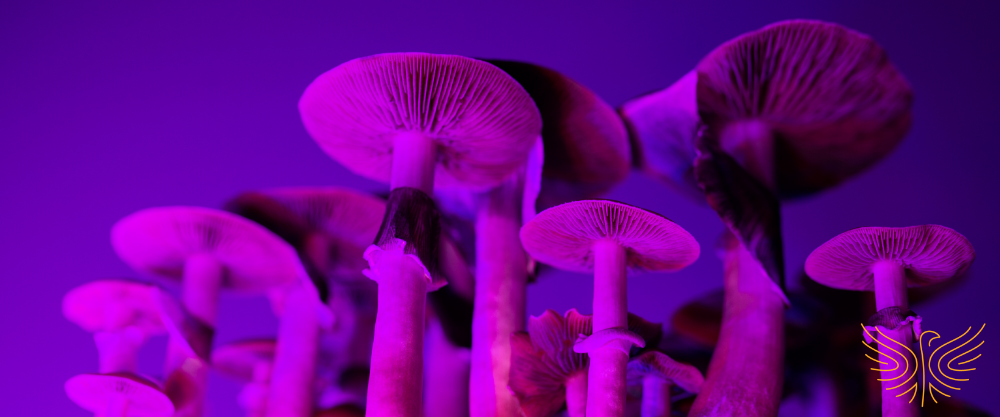


Hallucinogens are a broad and varied group of substances, and how long they stay in your system depends on which drug was used, how much, how often, and what kind of test is being administered.
While some substances may clear your system within hours, with hair-follicle testing, certain substances may show up for as long as 90 days. So, how does this vary across different hallucinogens? And when should you reach out for professional help?
How Long Do Hallucinogens Stay in Your System?
In general, most hallucinogens leave the bloodstream and urine within a few hours to a few days. However, hair-follicle tests can detect many substances for up to 90 days, regardless of the drug involved.

At the same time, standard drug panels, such as the 5-panel or 10-panel tests commonly used by employers, typically do not screen for most hallucinogens. Specialized testing is usually required.
With that said, phencyclidine (PCP) is one exception, since it’s actually included in many standard drug panels. Ultimately, detection times vary significantly from one hallucinogen to the next.
Detection Times for Common Hallucinogens
Each hallucinogenic substance has a unique chemical makeup, metabolizes at its own rate, and leaves behind different traces depending on the test being used. Here’s what tends to show up for the most commonly used hallucinogens.
LSD
Lysergic acid diethylamide (commonly known as LSD or acid) is one of the most difficult substances to detect on a drug test. Since it’s typically consumed in microgram doses (which is far smaller than most other drugs), it metabolizes quickly through normal liver function and exits the body rapidly.
On a urine test, LSD may be detectable for two to five days. Blood and saliva tests have an even narrower window, generally up to 16 hours after use. Yet, hair follicle testing can detect LSD for up to 90 days, though this type of testing is rarely ordered for this substance specifically.
Psilocybin (Magic Mushrooms)
Psilocybin, the active compound in magic mushrooms, metabolizes unusually fast compared to most other substances. It’s not detected on standard drug panels, and even with specialized testing, the detection window is very short.
Saliva tests may catch psilocybin for roughly one day after use. And since it clears the system so quickly, and specific testing is required, psilocybin is one of the harder substances to detect through routine screening. Hair follicle tests remain the exception, with the potential for detection up to 90 days.
PCP (Phencyclidine)
PCP, also called angel dust, has one of the longest detection windows of any hallucinogen. It’s also the most likely hallucinogen to appear on a standard drug panel, which makes it stand apart from others in this category.
On a urine test, PCP can be detected for up to 14 days with a single use, and even longer with chronic use. Blood tests can detect it for about one day, saliva tests for up to three days, and hair follicle tests for up to 90 days. Frequent or heavy use can, however, significantly extend the urine detection window, sometimes beyond three weeks.
Ketamine
Ketamine is a dissociative anesthetic that has both legitimate medical uses—such as surgical anesthesia and treatment-resistant depression—and a history of recreational misuse. So, how detectable is it?
On a urine test, ketamine is typically detectable for two to four days. Blood tests can detect it for approximately two days, saliva tests for about one day, and hair follicle tests for up to 90 days. Like most hallucinogens, ketamine is not included in standard drug panels and requires specific testing to be identified.
DMT
DMT (N-dimethyltryptamine) is found naturally in certain Amazonian plants, as well as produced synthetically. It has one of the shortest detection windows of any hallucinogen.
Urine tests can detect DMT for approximately one day, blood and saliva tests for 24 to 72 hours, and hair follicle tests for up to 90 days. DMT is particularly difficult to detect unless testing occurs very shortly after use. This is largely because it clears the body so rapidly compared to other hallucinogens.
What Factors Affect How Long Hallucinogens Stay in Your System?
The detection windows listed above are ranges; this is because how long a substance stays in your system is influenced by several individual factors, including:
- Body weight and metabolism
- Age and overall health
- Frequency and amount of use
- Hydration levels
- The specific substance
- The method of use
Getting Help for Hallucinogen Use
For some people, hallucinogen use is occasional or experimental. For others, it becomes a way to escape emotional pain, process trauma, or cope with depression, anxiety, or other mental health struggles. When substance use starts to feel like something you can’t control and begins to impact your relationships, career, or other daily activities, it might be time to consider getting professional help.
Freedom Recovery Centers (FRC) in Richmond, Virginia, offers compassionate, evidence-based care for substance use disorders and co-occurring mental health conditions. Our caring and experienced team can help you lead a brighter and healthier life. Call us today at 804-635-3746.

.svg)


.svg)


.svg)