.svg)





Maybe you’re facing a drug test. Maybe you’re starting - or stopping - a medication. Or maybe you’re trying to make sense of the symptoms your body is going through. Whatever the reason, wanting to know how long a prescription drug stays in your system is completely understandable.
The truth is that there’s no single, simple answer. How long a medication lingers in your body depends on several factors, including the drug itself, the dose, how long you’ve been taking it, and how your body processes it.
For people who’ve developed a dependence and are considering stopping, this timeline matters even more. Knowing when a drug begins to leave your system can help explain when withdrawal symptoms may start, why they unfold the way they do, and why recovery often takes longer than expected. So, let’s take a closer look.
_______________________________________________________
How Long Do Drugs Stay in the Body?
Different prescription drugs remain detectable in your system for varying lengths of time.
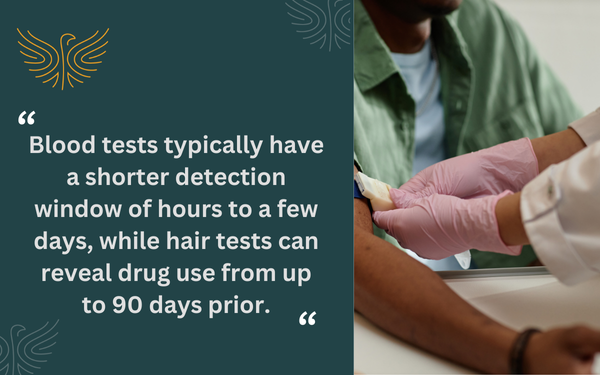
Generally speaking, most substances can be detected in urine for one to seven days after use, though some may linger much longer. Blood tests typically have a shorter detection window of hours to a few days, while hair tests can reveal drug use from up to 90 days prior.
Opioid painkillers, such as oxycodone and hydrocodone, are usually detectable in urine for two to four days, though long-acting opioids may be present longer. Benzodiazepines vary widely—short-acting ones like Alprazolam (Xanax) may clear within a few days, while long-acting benzos like diazepam (Valium) can be detected for weeks. Stimulant medications, such as Adderall, typically show up in urine for one to three days after the last dose.
But detection time and elimination time aren’t the same. A drug may no longer show up on a standard test but still be present in trace amounts, continuing to affect your body and brain as it fully clears.
Factors That Affect How Long Drugs Stay in Your System
No two people process medications exactly the same way. Several factors influence how quickly—or slowly—your body eliminates a prescription drug, such as:
- Your metabolism: People with faster metabolisms tend to process and eliminate drugs more quickly than those with slower metabolic rates.
- Your age: Your metabolism generally slows as we get older, meaning drugs may stay in an older person’s system longer than in a younger person's.
- Body composition: Many drugs are lipophilic, meaning they’re stored in fat tissue. Individuals with higher body fat percentages may thus retain certain medications longer because the drugs accumulate in fatty tissue and are released slowly over time.
- Liver and kidney health: These organs are primarily responsible for metabolizing and excreting drugs. If either organ isn’t functioning optimally, drugs can build up in your system and take longer to clear.
- Dosage and duration of use: Someone who has been taking a high dose of a medication for years will typically take longer to fully eliminate it than someone who took a lower dose for a shorter period. With prolonged use, drugs can accumulate in tissues, extending the time needed for complete elimination.
- Hydration, overall health, and genetics: These can influence drug clearance times. Some people have genetic variations that affect how their liver enzymes process certain medications, making them faster or slower metabolizers than the average person.
_______________________________________________________
What is a Drug’s Half-Life?
When doctors and pharmacists talk about how long a drug stays in your system, they often refer to its half-life. The half-life is the amount of time it takes for the concentration of a drug in your bloodstream to be reduced by half. This measurement helps predict how long a medication’s effects will last and how long it will take to leave your body entirely.
For example, if a drug has a half-life of four hours, after four hours, only half of the original dose remains active in your system. After another four hours (eight hours total), only a quarter remains. This process continues until the drug is essentially eliminated, which typically takes about five to six half-lives.
Short-acting medications have brief half-lives, sometimes just a few hours. This means they work quickly but also leave your system fast, which is why they often need to be taken multiple times a day. Long-acting medications have extended half-lives, sometimes 24 hours or more, allowing for once-daily dosing but also meaning they linger in your body much longer.
All of the above is worth noting because drugs with shorter half-lives often produce more intense withdrawal symptoms that begin sooner after the last dose. Your body notices the drug’s absence quickly and reacts accordingly. This is one reason why short-acting benzodiazepines and opioids can be especially challenging to quit.
Medications with longer half-lives also may have a more gradual onset of withdrawal symptoms, sometimes not appearing for days after you stop taking them. While this might sound easier, it can also mean a longer overall withdrawal period.
Half-life also explains why tapering—gradually reducing your dose over time—is so effective for managing withdrawal. By slowly lowering the amount in your system, you give your body time to adjust incrementally rather than shocking it with sudden absence.
_______________________________________________________
FRC is Here to Help
If you’re thinking about stopping a prescription medication you’ve become dependent on, don’t try to navigate this alone. Understanding half-lives and elimination times is helpful, but safe detox requires professional guidance.
The Freedom Recovery Centers (FRC) team understands the science behind prescription drug dependence—and more importantly, we understand the human being behind the struggle. If you’re worried about how to safely stop a medication, how long withdrawal might last, or what detox will feel like, we’re here to answer your questions and guide you through the process. Call us today at 804-635-3746. You deserve support, answers, and a clear path forward.

.svg)


.svg)


.svg)

