.svg)





If you’re in recovery and feel wiped out all the time—even on days when you’re eating better, sleeping more, and doing “what you’re supposed to do”—you’re not imagining it. Many people expect sobriety to come with a quick return of energy. While some things do improve, exhaustion and fatigue often set in at some point.
And this is known as recovery fatigue. Ultimately, your body and nervous system are doing a lot of behind-the-scenes repair, and this work takes time. Knowing this can make it easier to meet this phase with patience rather than frustration—and with a little more kindness toward yourself. So, let’s take a closer look at why this is happening and how you can support your body and mind through this phase of your recovery.
_______________________________________________________
What Is Recovery Fatigue?
Recovery fatigue refers to the physical, mental, and emotional exhaustion that many people experience during addiction recovery. It’s often a bone-deep weariness that can make even simple tasks feel overwhelming.
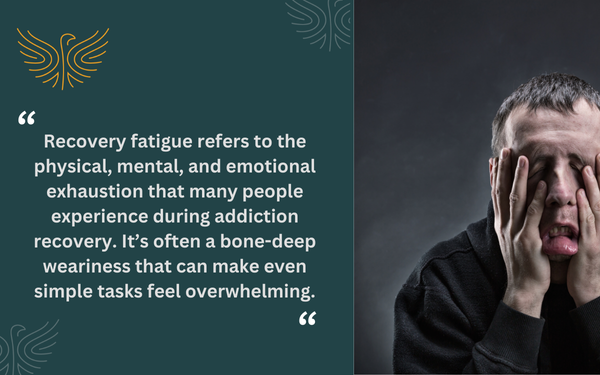
Here’s what’s going on: When you’ve been using drugs or alcohol for an extended period, your body and brain adapt to functioning with those substances. Once you stop, your system has to work overtime to rebalance itself. Neurotransmitters that regulate mood, energy, and motivation—such as dopamine and serotonin—require time to stabilize. Your body is also repairing damage, restoring healthy sleep patterns, and processing emotions that may have been numbed for months or years.
On top of these physical demands, recovery requires significant mental and emotional energy. You’re learning new coping skills, confronting difficult feelings, building new routines, and often working through therapy or support groups. All of this takes a toll, even when it’s helping you heal. But yes, this can be exhausting!
_______________________________________________________
How to Support Your Energy Levels Throughout Recovery
While recovery fatigue is a natural part of the process, there are steps you can take to support your body and mind as you heal, such as:
Prioritize Your Sleep
Sleep disturbances are incredibly common in early recovery. Your body’s natural sleep-wake cycle may have been disrupted by substance use, and it takes time to reset. But creating a consistent bedtime routine, limiting screen time before bed, and keeping your sleep environment cool and dark can help you get much-needed rest.
If you’re struggling with insomnia or restless sleep, talk to your treatment team—there are other strategies that can help without compromising your sobriety!
Nourish Your Body
Addiction often leads to nutritional deficiencies, and your body needs proper fuel to recover.
So, ensure you focus on balanced meals with plenty of protein, complex carbohydrates, healthy fats, fruits, and vegetables. Additionally, stay hydrated throughout the day (bringing a water bottle with you throughout your day can help here!). Lastly, avoid relying on caffeine or sugar for quick energy boosts—these can lead to crashes that make fatigue worse in the long run (and which may also not help your overall health either).
Move Your Body Gently
It might seem counterintuitive when you’re exhausted, but gentle movement can actually boost your energy levels. Exercise releases endorphins, improves sleep quality, and helps regulate mood.
However, you don’t need to do anything over the top here. A short walk, some stretching, or a beginner yoga class can make a meaningful difference. Simply listen to your body and start slow. A little bit of movement is always better than none at all!
Pace Yourself
Recovery isn’t a sprint. It’s okay to say no to commitments that feel like too much right now.
It can also help to intentionally build rest into your schedule and avoid comparing your journey to anyone else’s. Some days will be harder than others, and that's okay. Give yourself permission to take things one step at a time.
Lean on Your Support System
You don’t have to navigate this alone. Whether it’s family, friends, a therapist, a sponsor, or a support group, connecting with others who understand what you’re going through can lighten the emotional load. Ultimately, sharing your struggles—including your fatigue—helps normalize the experience and reminds you that recovery is a journey many have walked before.
_______________________________________________________
Recovery Is Possible
Recovery fatigue can feel discouraging, but it’s important to remember that it’s temporary. As your body continues to heal and you build new habits, your energy will return. The exhaustion you’re feeling now is part of the process.
At Freedom Recovery Centers (FRC), we’re here to support you through every stage of your recovery journey. Our compassionate team is committed to helping you build a healthier, brighter future. If you or a loved one is struggling with addiction, call us at 804-635-3746.

.svg)


.svg)


.svg)