.svg)





If you’re in recovery—or thinking about starting—you’ve probably heard people talk about cravings. Maybe you’ve already experienced them yourself, that sudden, overwhelming urge that seems to come out of nowhere and demand your full attention.
Cravings can feel confusing, frustrating, and even frightening. But they’re a normal part of recovery, and understanding the science behind them can help you navigate them with confidence.
At the end of the day, cravings are temporary, manageable, and they do get easier. So, let’s take a closer look at what’s really happening when a craving strikes and how you can move through it.
_______________________________________________________
What Are Cravings?
A craving is an intense desire or urge to use a substance. And it can feel both all-consuming physically and emotionally. You might notice your heart racing, your palms sweating, or a restless energy building in your body. Mentally, it can feel like the substance is all you can think about, crowding out everything else.
Cravings can also be triggered by all sorts of things, such as a familiar place, a certain song, stress, boredom, or even positive emotions like celebration. They can sneak up on you when you least expect them, which is part of what makes them so challenging. But understanding how they work gives you an advantage.
How Cravings Work
When you use a substance, it floods your brain with dopamine—a chemical that creates feelings of pleasure and reward. Over time, your brain starts to associate certain cues with that dopamine rush. These cues become triggers.
When you encounter a trigger—whether it’s a person, place, emotion, or even a time of day—your brain automatically starts down that familiar path, expecting the reward it’s learned to anticipate. That expectation is the craving.
The more often you traveled that path in the past, the stronger the connection became. This is why cravings can feel so automatic and overpowering. Your brain has essentially been trained to want the substance, and it takes time to build new pathways and weaken the old ones.
And with repeated substance use, your brain adjusts its chemistry to accommodate the presence of the substance. When the substance is removed, your brain is left in an imbalanced state, which can intensify cravings as it tries to return to what it now considers “normal.”
_______________________________________________________
Why Are Cravings Intense in Early Recovery?
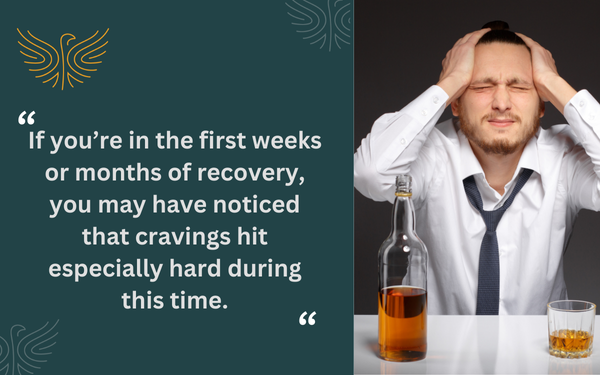
If you’re in the first weeks or months of recovery, you may have noticed that cravings hit especially hard during this time. In early recovery, your brain is still adjusting to life without the substance. Those neural pathways we talked about? They’re still strong because they haven’t had time to weaken yet.
Your brain is used to getting its dopamine fix from the substance, and it hasn’t fully learned to find pleasure and reward in other ways. This makes everything feel flat or gray, intensifying the desire to use.
Emotionally, early recovery is often a time of heightened vulnerability. You may be dealing with feelings you numbed for years—stress, anxiety, sadness, or even joy that feels unfamiliar. Without your usual coping mechanism, these emotions can feel overwhelming, and your brain naturally reaches for what it knows worked before.
On top of this, if substance use was woven into your daily routine, you’ll encounter countless triggers simply by going about your day. Morning coffee, driving home from work, weekend evenings—all of these can spark cravings because they’re connected to memories of using.
The important thing to remember is that this intensity is temporary. As you build new habits, develop healthier coping strategies, and allow your brain chemistry to stabilize, cravings become less frequent and less powerful.
_______________________________________________________
How To Overcome a Craving
When a craving hits, it can feel like it will last forever—but it won’t. Most cravings peak within 15 to 30 minutes and then begin to fade. Your job is to ride the wave until it passes. Here are some strategies that can help.
First, recognize and name what’s happening. Simply saying to yourself, “This is a craving, and it will pass,” can create a small but powerful distance between you and the urge. You’re not the craving—you’re the person observing it.
Second, remove yourself from the trigger if possible. If you’re in a place or situation that’s fueling the craving, change your environment. Step outside, go to a different room, or call someone who supports your recovery.
Third, distract your mind and body. Physical movement is especially effective—take a walk, do some stretches, or even just pace around. Other distractions like listening to music, playing a game, or tackling a small task can help shift your focus until the craving subsides.
Here are quick, easy distractions you can try when a craving hits:
- Go for a short walk or stretch for 2-3 minutes.
- Drink a full glass of water.
- Put on a song you love or something calming.
- Do a quick chore (dish, wipe a counter, tidy one small area).
- Text or call someone supportive.
- Chew gum or have a mint.
- Step into a different room or outside for fresh air.
Fourth, practice deep breathing or grounding techniques. Slow, deliberate breaths can calm your nervous system and reduce the physical intensity of the craving. Grounding exercises—such as naming five things you can see, four you can hear, and three you can touch—bring you back to the present moment.
Finally, reach out for support. Call a friend, attend a meeting, or contact your treatment team. You don’t have to white-knuckle your way through cravings alone. Connection is one of the most powerful tools in recovery.
At the end of the day, with the proper support and strategies, you can learn to move through them and come out stronger on the other side. And the Freedom Recovery Centers (FRC) team is ready to help. Call us today at 804-635-3746. Your brighter, happier future, where cravings aren’t holding you back, awaits!

.svg)


.svg)


.svg)