.svg)





Fentanyl often ends up in the hands of people who never intended to take it. It’s frequently found in counterfeit pills, in cocaine, and in substances people thought were something else entirely.
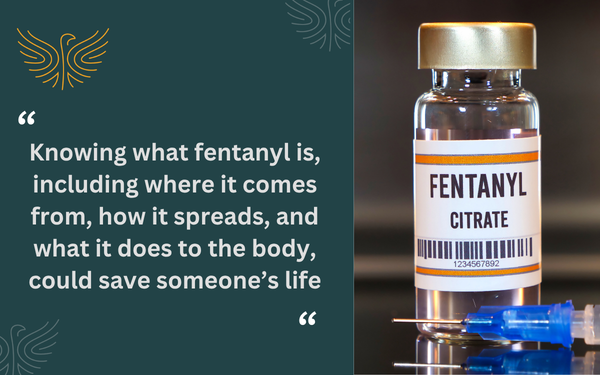
Knowing what fentanyl is, including where it comes from, how it spreads, and what it does to the body, could save someone’s life. Below, we explore the origins of fentanyl, how it enters Virginia communities, what addiction looks like, and how to get help.
What is Fentanyl?
Fentanyl is a fully synthetic opioid, meaning it isn’t derived from any plant. It’s engineered from scratch using chemical compounds in a laboratory setting.
It was first developed in 1960 by Belgian pharmacologist Paul Janssen, originally intended for use as a surgical anesthetic. In medical settings, it’s still used today in carefully measured doses for managing severe post-surgical pain or chronic pain in cancer patients.
Fentanyl is thought to be 50 to 100 times stronger than morphine. This means the margin between a dose that produces effects and a dose that stops someone’s breathing is very narrow. In a hospital, this is very manageable. On the street, where no dose is guaranteed to be consistent, it can quickly become life-threatening.
Where Does Fentanyl Come From?
Illicit fentanyl is synthesized, which means it can theoretically be produced anywhere with the right chemicals and equipment.
The majority of illicit fentanyl entering the United States is manufactured in clandestine labs operated by Mexican drug trafficking organizations. These organizations source the chemical precursors needed to produce fentanyl largely from suppliers in China and India, then manufacture and press the drug into pill form or powder before moving it across the southern border.
From there, it flows through domestic distribution networks. And Virginia is not insulated from that pipeline. The I-95 corridor has long been a major trafficking route, connecting larger entry points to Richmond and surrounding communities.
Today, fentanyl is the leading cause of drug overdose deaths in Virginia, and it frequently shows up in ways people don’t expect, such as pressed into counterfeit pills designed to look like prescription medications, or mixed into cocaine and other substances without the user’s knowledge.
What Is Fentanyl Addiction?
Fentanyl can create physical dependence very quickly, sometimes after only a handful of exposures. Essentially, fentanyl floods the brain’s opioid receptors, triggering a surge of dopamine far more intense than the brain produces naturally.
Over time, the brain begins to adapt to that level of stimulation. It recalibrates. And once that happens, a person needs fentanyl just to feel normal.
Fentanyl withdrawal, on the other hand, typically begins within hours of the last use and can include severe muscle cramping, nausea and vomiting, cold sweats, uncontrollable anxiety, and insomnia. In fact, the intensity of withdrawal is one reason people find it so difficult to stop on their own.
Signs of Fentanyl Addiction
Addiction to fentanyl can look different from person to person, but there are common warning signs, such as:
- Pinpoint pupils
- Nodding off or appearing sedated
- Noticeable weight loss
- Slowed or shallow breathing
- Becoming secretive or withdrawn
- Losing interest in things that once mattered
- Neglecting work, school, or family responsibilities
- Going to unusual lengths to obtain drugs
- Intense mood swings
- Irritability or agitation between uses
- Anxiety or depression
It’s also worth noting that because fentanyl is so often mixed into other substances, someone can develop a dependence on it without ever knowing they were taking it.
Getting Help for Fentanyl Addiction
Fentanyl addiction is one of the most serious forms of opioid use disorder. But the good news is that it’s treatable. Recovery is possible.
Medical detox is almost always the recommended first step, given how intense fentanyl withdrawal can be. From there, residential treatment allows time and space to address both the physical and psychological sides of addiction. Medication-assisted treatment (MAT) options may also play an important role in stabilizing the brain’s chemistry during early recovery.
At Freedom Recovery Centers (FRC) in Richmond, VA, we provide compassionate, evidence-based care for people navigating fentanyl and opioid addiction. If you or someone you love is struggling, reaching out is the most important step you can take. Call us at 804-635-3746 today.

.svg)


.svg)


.svg)

