.svg)


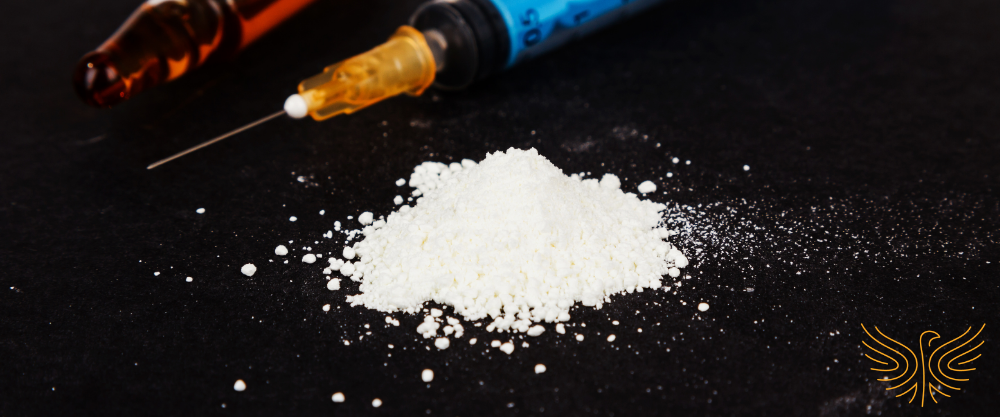


Heroin comes from the opium poppy, a flowering plant grown mostly in Mexico, Colombia, and parts of Asia. The plant produces a milky sap that’s processed into morphine, then chemically converted into heroin in man-made labs.
Below, we take a closer look at the plant behind the drug, the four countries that produce most of the world’s heroin, how it reaches the United States, and what all of that means if you or someone you love is struggling here in Virginia.
Where Does Heroin Originate?
Every batch of heroin on earth starts with the same plant called Papaver somniferum, better known as the opium poppy. Farmers slice the unripe seed pod with a small blade, and a milky sap oozes out. This sap dries into a sticky resin called opium.
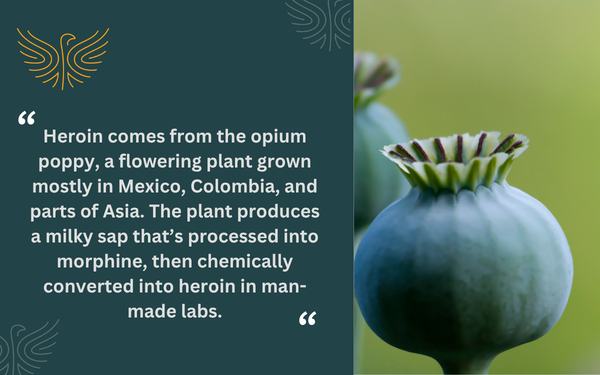
Opium contains several naturally occurring compounds, including morphine. To make heroin, chemists extract the morphine from the opium and then run it through a chemical process that turns it into diacetylmorphine.
Which Countries Produce the Most Heroin?
Four countries produce nearly all of the world’s heroin. Each one supplies different markets, and the heroin from each region tends to look, feel, and behave a little differently.
Mexico
Mexico is the single largest source of heroin in the United States. Mexican cartels control the entire chain, from cultivation in remote mountain regions to smuggling routes across the southern border.
Afghanistan and the Golden Crescent
For more than two decades, Afghanistan was the world’s leading opium producer. It supplied the majority of heroin used in Europe, Russia, and parts of Asia. After the Taliban’s poppy ban, cultivation in Afghanistan dropped by roughly 95%, but existing stockpiles and trafficking routes through Iran and Pakistan still feed the global market.
Myanmar and the Golden Triangle
The region where Myanmar, Laos, and Thailand meet is one of the oldest opium-producing regions in the world. After years of decline, production in Myanmar has surged since 2021, making it the world’s largest opium producer once again. Heroin from this region mostly supplies Asia, Australia, and parts of Europe.
Colombia
Colombia historically supplied much of the white powder heroin sold along the East Coast of the United States, particularly in cities such as New York, Boston, and Miami. Today, that role has shrunk significantly.
Opium poppy cultivation in Colombia has fallen to a small fraction of what it used to be, and most Colombian criminal groups have refocused on cocaine, a market in which Colombia remains the world’s largest producer.
How Does Heroin Get to the United States?
Almost all heroin in the United States enters through the southwest border. Cartels move it in vehicles, cargo trucks, false compartments, and personal couriers crossing legal ports of entry.
Once inside the country, heroin moves through major distribution hubs such as Los Angeles, Phoenix, Houston, Chicago, and Atlanta, before being broken down, cut with other substances, repackaged, and sold at the street level along the East Coast. From there, it’s broken down, cut with other substances, repackaged, and sold.
Yet, by the time heroin reaches a user, it has changed hands many times, and almost every batch sold in the U.S. today has been mixed with illicit fentanyl.
Unfortunately, Virginia sits along the I-95 corridor, one of the most active heroin and fentanyl trafficking routes on the East Coast. Drugs flow into the state from both directions, north from Atlanta and the Carolinas, and south from New York and New Jersey, before reaching Richmond, Norfolk, Hampton Roads, and Northern Virginia.
Getting Help for Heroin Addiction in Richmond, VA
If you or someone you love is struggling with heroin, know that recovery is possible and help is nearby. Our team at Freedom Recovery Centers (FRC) is located right here in the Richmond area, offering compassionate, evidence-based care.
Heroin addiction is a treatable substance use disorder when the right support is in place. Call us today at 804-635-3746. We’re here to listen and guide you toward a healthier and happier life.

.svg)


.svg)


.svg)