.svg)


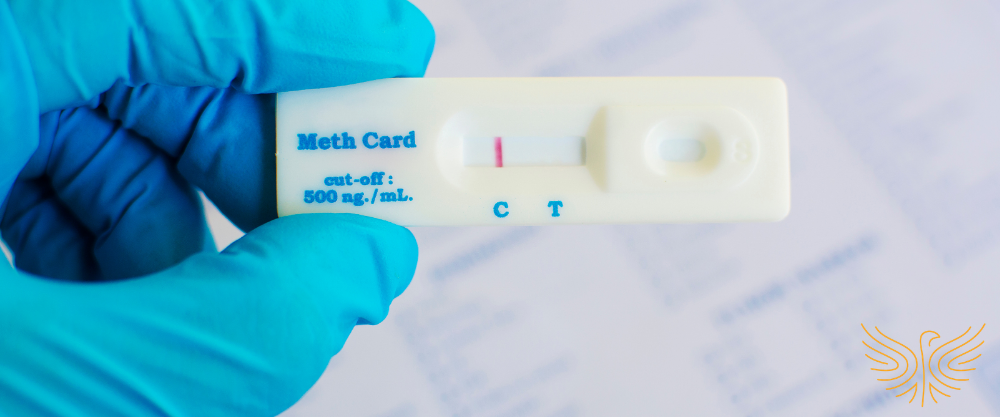


The meth being used in America today isn’t the same meth that existed 10 or 15 years ago. It’s stronger, purer, and comes from a completely different place than decades ago.
Whether you’re struggling with your own meth use or you’re worried about someone you love, knowing where this drug actually comes from offers powerful knowledge. While it won’t change the road ahead, it can take some of the shame out of the conversation.
What Is Meth? And Where Did It Originate?
Methamphetamine is a synthetic stimulant, meaning it’s made in a lab. It was first synthesized in Japan in the late 1800s, and by 1919, a Japanese chemist named Akira Ogata had figured out how to turn it into the crystal form we now call crystal meth.

For much of the 20th century, meth wasn’t actually an illegal street drug. During World War II, soldiers on multiple sides used it to stay awake and push through exhaustion. In the 1950s and 60s, it was commonly prescribed in the U.S. for various ailments, including depression, weight loss, and nasal congestion. It wasn’t until 1970, with the Controlled Substances Act, that meth was restricted in the way we recognize today.
How Was Meth Originally Made in the United States?
Through the 1990s and early 2000s, most meth in the U.S. was “cooked” in small domestic labs, often in rural homes, trailers, or motel rooms. The basic recipe used pseudoephedrine, the active ingredient in many over-the-counter cold medicines, combined with toxic industrial chemicals, such as lithium, anhydrous ammonia, and various solvents.
These setups were extremely dangerous. Meth labs frequently caught fire, exploded, or leaked toxic fumes that harmed everyone nearby, including children living in the home.
In 2005, Congress passed the Combat Methamphetamine Epidemic Act, which moved pseudoephedrine products behind pharmacy counters and limited how much any one person could buy. Small domestic labs dropped sharply after that. Some cooks tried to work around the restrictions with the “shake and bake” method (making small batches in plastic bottles) but those were even more prone to exploding.
Where Does Meth Come From Today?
When pseudoephedrine got harder to get in the U.S., Mexican drug cartels stepped in to fill the gap. And they did this on an industrial scale.
Today, the overwhelming majority of meth in the U.S. is produced in Mexican “super labs” using a completely different chemical process called the P2P method (short for phenyl-2-propanone).
Unlike pseudoephedrine, P2P and its related chemicals have dozens of legitimate industrial uses, such as for racing fuel, perfume, tanning, and gold mining, which makes them much harder to regulate. The precursor chemicals often come from China or India before reaching Mexico.
But how big a problem is this really?
Here are some stats: U.S. Customs and Border Protection seized 17,846 pounds of meth in fiscal year 2012. By 2018, that figure had more than tripled to 67,676 pounds. In 2022, southwest border seizures topped 160,000 pounds. And by 2012, 96% of meth samples analyzed by the DEA were already P2P meth, not the old ephedrine-based version.
Why Is Today’s Meth More Dangerous Than Before?
P2P meth is purer and more potent than what was on the streets 15 years ago. According to DEA data, average purity has jumped from around 39% in 2008 to over 93% in more recent years. Meth-involved overdose deaths nearly tripled between 2015 and 2019.
Beyond the numbers, P2P meth is strongly linked to faster-onset psychosis, paranoia, hallucinations, and sudden, sharp personality changes.
On top of all that, today’s meth is increasingly contaminated with fentanyl, which means a fatal overdose can happen from a single use.
What Should You Do If You or Someone You Love Is Using Meth?
To be clear, meth addiction isn’t a character flaw or a lack of willpower. It’s a human response to a chemical that has been refined, over decades, to hijack the brain’s reward system. Walking away from it on your own is extraordinarily hard, and there is no shame in needing help.
At Freedom Recovery Centers (FRC) in Richmond, Virginia, we offer medically supervised detox, evidence-based therapy, and dual diagnosis care for meth addiction and the mental health conditions that often come with it. If you’re just starting to think about getting help, you don’t have to commit to anything to have a conversation. Call us at 804-635-3746, or fill out our online form, any time. Whenever you’re ready, we’re here.

.svg)


.svg)


.svg)