.svg)





Recovery involves many hurdles, from managing cravings to getting through that initial withdrawal phase. However, one common challenge many people don’t anticipate is loneliness.
While you might have expected recovery to feel empowering, and in many ways it is, it can also feel incredibly quiet and isolating. Friends disappear. Social situations feel awkward. And even when you’re surrounded by people, you might feel like no one truly understands what you’re going through.
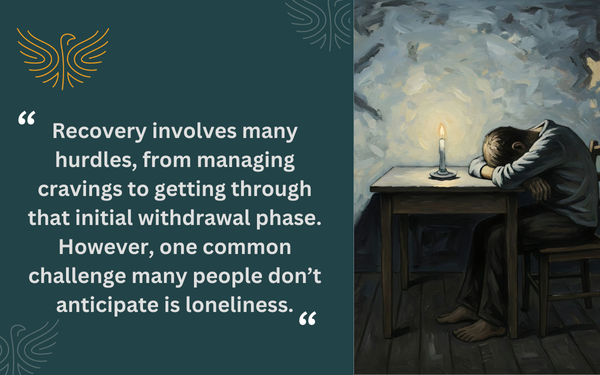
This can be tricky to navigate, but not impossible. Below, we dive into why recovery may lead to loneliness and how you can cope in a healthy and productive way!
_______________________________________________________
Why Is Recovery So Lonely?
There are real, understandable reasons why recovery can feel so isolating—and recognizing them can help you move through this difficult season with more self-compassion. So, here are the most common reasons you might feel a bit lonely during this season of your recovery journey:
Your Social Circle Changes
For many people, substance use was a social activity. Drinking buddies, party friends, and people you used with may have made up a significant part of your social life.
When you get sober, those relationships often can’t survive the change. Some people will distance themselves because your sobriety makes them uncomfortable. Others you’ll need to step away from to protect your recovery. Either way, you may find yourself with a much smaller circle—or no circle at all.
Old Friends Don’t Understand
Even friends who didn’t use substances with you may struggle to understand what you’re going through. They might not grasp why you can’t “just have one drink” or why certain situations feel triggering. Their well-meaning but misguided comments can make you feel more isolated, not less.
Social Situations Feel Different
Sobriety changes how you experience social events. Parties, happy hours, concerts, and even family gatherings can feel uncomfortable when everyone around you is drinking or using. You might feel like an outsider, watching from the sidelines while others relax and have fun. Over time, you may start avoiding these situations altogether - which only deepens the sense of isolation.
You’re Confronting Emotions You Used to Numb
Substances often serve as a buffer against difficult emotions. In recovery, those feelings come flooding back—grief, shame, anxiety, sadness. Processing these emotions is essential work, but it can also feel incredibly lonely. You’re facing parts of yourself that you’ve avoided for a long time, and this internal journey can be isolating even when others are nearby.
Stigma and Shame Create Barriers
Despite growing awareness, addiction still carries stigma. You might feel embarrassed to talk about your recovery or worry about being judged. This shame can keep you from opening up to others, even people who might be supportive. When you hide a significant part of your life, a genuine connection can become harder to build.
_______________________________________________________
How to Cope With Loneliness During Recovery
When you feel isolated and disconnected, the temptation to return to old habits grows stronger. Substances can seem like a quick fix for the emptiness. This is why addressing loneliness is an essential part of protecting your sobriety. As such, here are some ways to start building connections again.
Seek Out Recovery Communities
One of the most powerful antidotes to loneliness is connecting with people who truly understand. Support groups, such as AA, NA, SMART Recovery, or other recovery communities, bring together people who have walked similar paths.
In these spaces, you don’t have to explain yourself or hide your struggles. You can be honest about what you’re going through and receive support from people who get it and understand.
Be Patient With New Friendships
Building a new social circle takes time. The friendships you form in recovery may start slowly, and that’s okay. Focus on quality over quantity. One or two people who genuinely support your sobriety are worth more than a crowd of acquaintances.
Stay Connected to Your Treatment Team
Therapists, counselors, and sponsors aren’t just there to help you stay sober—they’re also sources of meaningful connection. Don’t hesitate to share your feelings of loneliness with them. They can offer support, perspective, and practical strategies for building community.
Try New Activities
Recovery opens the door to exploring interests you may have neglected or never discovered. Join a class, volunteer, take up a hobby, or find a fitness group. These activities put you in contact with new people in low-pressure environments. Shared interests create natural opportunities for connection.
Practice Reaching Out
When loneliness hits, the instinct is often to withdraw further. Instead, challenge yourself to do the opposite. Send a text to someone in your support network. Call a family member. Show up to a meeting even when you don’t feel like it.
Be Honest About How You’re Feeling
It’s tempting to put on a brave face and pretend everything is fine. But pretending often makes loneliness worse. When you’re struggling, say so. Whether it’s to a therapist, a sponsor, a friend, or a support group, being vulnerable about your loneliness creates space for others to support you—and reminds you that you don’t have to carry this alone.
At Freedom Recovery Centers (FRC), our team is here to help you through every stage of that story. Our compassionate team provides the support, community, and resources you need to build a fulfilling life in recovery. You don’t have to do this alone. Call us today at 804-635-3746.

.svg)


.svg)


.svg)