.svg)


12-step programs work by combining a structured sequence of steps with regular peer-support meetings and one-on-one guidance from a sponsor. Together, these elements help you move from honestly acknowledging your addiction to repairing past harm, and eventually, toward maintaining lasting recovery.
In fact, you’ve likely heard of Alcoholics Anonymous (AA), which is one of the most well-known 12-step programs. But if you’ve never attended a meeting, it can be a mystery as to what actually happens inside. And that mystery may prevent you or a loved one from attending; the unknown can be nerve-wracking.
Below offers a clear look at how 12-step programs work, from the very first meeting all the way through to lasting recovery.
What Is a 12-Step Program?
A 12-step program is a peer-led support group built around a shared set of guiding principles. The approach began in 1935 with Alcoholics Anonymous (AA), and it has since grown into a whole family of fellowships, including Narcotics Anonymous (NA), Gamblers Anonymous, and many more.
These groups are free to attend, open to anyone who wants to be there, and grounded in anonymity. In other words, what’s shared in the room stays in the room.
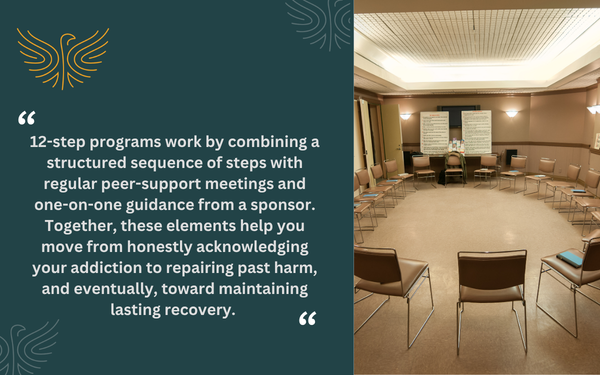
For most people, the journey starts simply by showing up. Meetings come in a few forms, including open meetings that welcome anyone, such as curious family members, and closed meetings reserved for those working toward their own recovery.
Some center on a single speaker sharing their story; others are open discussions or focused studies of the steps. There’s no fee, no paperwork, and no pressure to speak before you’re ready; many people just listen at first.
Working Through the 12 Steps
The twelve steps are essentially a sequence of actions meant to be worked through thoughtfully, at your own pace, and usually with guidance. While the exact wording belongs to each fellowship, the steps tend to move through four natural phases:
Steps 1-3: Acceptance and Letting Go
The early steps are about honesty. They invite you to admit that substance use has become unmanageable, to open yourself to the possibility that things can change, and to release the belief that you have to fix everything through sheer willpower. For many people, this is both the hardest part and the most freeing.
Steps 4-7: Honest Self-Examination
The middle steps turn inward. You take an honest look at your own patterns, your behavior, and the harm they may have caused. Instead of sinking into shame, the goal is clarity, such as understanding yourself well enough to begin to change, and becoming willing to let go of what no longer serves you.
Steps 8-9: Making Amends
These steps move from reflection into action. You make a list of the people your addiction may have hurt, and then, where it’s safe and possible, you work to repair those relationships.
To be clear, making amends is rooted in accountability, as well as the relief that often comes from finally setting things right.
Steps 10-12: Growth and Giving Back
The final steps are about keeping recovery alive and staying on track. They encourage ongoing self-reflection, a daily commitment to growth, and carrying the message to others who are still struggling.
The Role of a Sponsor
A sponsor is a member further along in their own recovery who agrees to guide a newcomer through the steps. They’re not a therapist or an authority figure; they’re someone who has walked the same road and can offer perspective, encouragement, and a steady voice in hard moments.
Many people reach out to their sponsor between meetings, especially when cravings or difficult days strike. Ultimately, this one-on-one relationship adds a layer of accountability and connection that meetings alone can’t always provide.
How 12-Step Programs Fit Into Your Recovery
Twelve-step programs can be a meaningful part of recovery, but they tend to work best alongside other forms of care rather than on their own. For many people, lasting healing begins with medically supervised detox and includes therapy, treatment for any underlying mental health conditions, and sometimes medication-assisted treatment.
At Freedom Recovery Centers (FRC), we understand that no single recovery journey looks the same, and we’re here to help you take that next step forward. Our compassionate team will meet you exactly where you are. Call us anytime at 804-635-3746.

.svg)


.svg)


.svg)