





Typically, with a fentanyl overdose, breathing slows, becomes shallower, or stops altogether, and an individual’s pupils shrink to tiny dots.
You might notice their lips or fingertips turning blue or gray, or hear gurgling or heavy snoring. Even if you shout their name or shake them, they won’t respond.
Surprisingly, there’s usually no dramatic collapse. It often simply seems as though the individual is dozing on the couch or just really out of it.
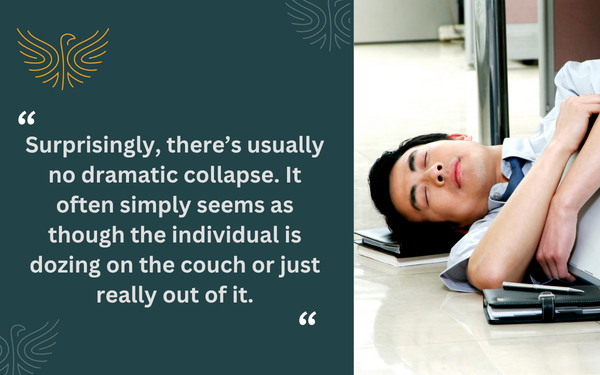
And this can make an overdose hard to spot until it’s too late. However, with prompt action, an overdose can be reversed. In fact, knowing the signs and keeping naloxone (Narcan) on hand could save someone’s life. ¹ ²
Signs of a Fentanyl Overdose
Fentanyl is an opioid, meaning a fentanyl overdose follows the same pattern as other opioid overdoses. ³
Here are signs to watch for:
- They don’t wake up when you shout their name or rub your knuckles firmly on their breastbone.
- Breathing is slow, shallow, irregular, or has stopped completely.
- Gurgling, choking, or deep snoring.
- Pinpoint pupils.
- Their lips and fingernails turn blue, gray, or ashen. On darker skin, check the lips, gums, and inside of the lower eyelids.
- A limp body.
Early vs. Severe Fentanyl Overdose Signs
Is It an Overdose or Are They Just High?
Often, the key difference is whether they can be roused and whether they’re breathing normally. Here’s a breakdown of the differences between being high vs overdosing:
If you’re not sure, treat it as an overdose. Naloxone won’t harm someone who isn’t overdosing on opioids, but waiting to see what happens can cost a life. ⁴
What to Do If You Think Someone Is Overdosing
Stay as calm as you can, and follow these steps:
- Call 911. Tell the dispatcher someone is unresponsive and not breathing well.
- Give naloxone. Spray one dose into one nostril. It can start working within a few minutes.
- Support their breathing. If you’re trained, give rescue breaths: tilt their head back, pinch their nose, and give one breath every five seconds.
- Put them in the recovery position. Roll them onto their side with their top knee bent so they won’t choke if they vomit.
- Give a second dose if needed. If there’s no improvement after 2 to 3 minutes, use another dose in the other nostril. Fentanyl’s strength means more than one dose is sometimes necessary.
- Stay with them. Naloxone wears off faster than fentanyl, so the overdose can return. Don’t leave until help arrives. ⁵ ⁶ ⁷
You might also hear about xylazine, or “tranq,” an animal sedative that’s increasingly mixed into the fentanyl supply. Naloxone doesn’t reverse xylazine, but you should still give it, since fentanyl is almost always present too. ⁸
If you’re worried about yourself or someone you love and you don’t have naloxone yet, consider picking some up. Narcan nasal spray has been available over the counter since 2023, so you don’t need a prescription. ⁹
Will I Get in Trouble for Calling 911 in Virginia?
Virginia has a safe reporting law. In general, it protects people who seek emergency help in good faith, whether for themselves or someone else, from being arrested or prosecuted for certain offenses, such as simple drug possession. To qualify, you typically need to stay at the scene, identify yourself to responding officers, and cooperate with law enforcement. ¹⁰
However, there are conditions and limits. But when someone’s life is on the line, calling 911 is always the right decision.
Getting Help After an Overdose
Surviving an overdose can be frightening, exhausting, and mix bag of emotions, for the person who overdosed and for everyone who witnessed it. It can also be a turning point.
At Freedom Recovery Centers (FRC), we meet you exactly where you are, ensuring you get the help you need. Our caring team offers medically supported treatment in a safe, judgment-free setting. If you or someone you love is ready to talk, we’re here day or night. Call us at 804-635-3746.


