.svg)





With meth withdrawal, you might feel completely drained, sleep for long stretches, wake up ravenous, and feel a heaviness in your mood that you can’t shake.
For most, the biggest hurdle are the emotional aspects, such as combating depression, intense cravings, and a sense that nothing feels good anymore. ⁴
And fear of this crash can continue to fuel the cycle of addiction. But withdrawal is temporary. Your brain has a remarkable ability to heal.
Key Takeaways
Why Does Meth Withdrawal Happen?
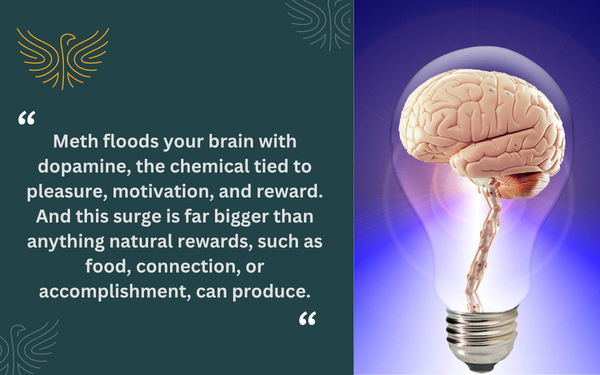
Meth floods your brain with dopamine, the chemical tied to pleasure, motivation, and reward. And this surge is far bigger than anything natural rewards, such as food, connection, or accomplishment, can produce. ¹
As time goes on, your brain adapts. It makes less dopamine on its own and becomes less responsive to it. This means that when meth is suddenly gone, your brain is left running on empty. And this is where many individuals feel a crash in their mood. ²
Yet, with time and support, your body and brain do rebalance. Recovery is possible, and you don’t have to do it alone (more on this below).
What Does Meth Withdrawal Feel Like?
Meth withdrawal is generally less physically dangerous than other drug withdrawals, but it can feel emotionally crushing, especially in the first week or two. Here’s what to expect if you or a loved one is considering entering rehab for a meth addiction.
Physical Symptoms
Common physical symptoms include:
- Extreme fatigue and sleeping more than usual
- Trouble sleeping or vivid, unsettling dreams
- A big increase in appetite
- Body aches and headaches
- Moving or thinking more slowly than normal
Many people describe their body as feeling heavy, where even getting out of bed takes everything they have. But again, this is temporary. These feelings won’t last forever.
Emotional and Mental Symptoms
Emotional and mental symptoms of withdrawal may include:
- Depression and low mood
- Anxiety, irritability, or agitation
- Trouble concentrating or remembering things
- Strong, sometimes overwhelming cravings
- Anhedonia, which is the inability to feel pleasure
Anhedonia is one of the most discouraging parts of meth withdrawal. Things that used to bring you joy, such as music, time with friends, or a good meal, may suddenly feel flat. If this sounds familiar, know these feelings aren’t permanent, and they don’t mean you’re broken. They’re simply signs that your brain is healing.
Physical vs. Emotional Meth Withdrawal Symptoms
Meth Withdrawal Timeline
Everyone's timeline is a little different, but research shows meth withdrawal tends to follow a fairly predictable pattern. Symptoms are usually most intense in the first week, then gradually ease over the following weeks. Cravings, however, can stick around longer than other symptoms. ⁵ ⁶
The last phase is sometimes called post-acute withdrawal. It doesn’t happen to everyone, but some individuals may notice that their energy and motivation take a few months to fully return. This is completely normal and often gets better with time. ⁷ ⁸
In terms of how long withdrawal lasts depends on factors such as how long and how much you used, your overall health, and whether you’re also living with a co-occurring mental health condition. This is why rehab can be so important; a team of professionals can ensure you’re safe and supported throughout the process.
Is Meth Withdrawal Dangerous?
Meth withdrawal is usually less physically risky than withdrawal from alcohol or benzodiazepines. But this doesn’t mean it’s safe to endure the withdrawal phase alone.
The biggest risks are emotional and mental, such as:
- Severe depression and suicidal thoughts
- Psychosis or paranoia (This is more common after heavy or long-term use and usually fades within days, though it can be frightening)
- Relapse (Cravings are strongest early on. Using again after a break can also be especially dangerous, since street meth is increasingly contaminated with fentanyl.)
If you or someone you love is having thoughts of suicide, call or text 988 to reach the Suicide & Crisis Lifeline. If someone is in immediate danger, call 911 right away.
How Treatment Helps With Meth Withdrawal
A supervised setting can make withdrawal safer, more comfortable, and far less isolating. ¹¹
In a residential treatment center, such as Freedom Recovery Centers (FRC), support may include:
- 24/7 monitoring by medical and clinical staff
- Medications to ease specific symptoms, such as trouble sleeping or anxiety
- Regular meals, rest, and a structured daily routine
- Therapies such as cognitive behavioral therapy (CBT) to help you manage cravings and triggers
- Dual diagnosis care if depression, anxiety, or trauma is part of the picture
Just as importantly, you’ll be surrounded by others who understand what you’re going through. On the hardest days, that alone can make all the difference.
Whenever you’re ready to take that next step, we’re here to help guide you. At Freedom Recovery Centers (FRC), our team offers compassionate and expert care, ensuring you get the help you deserve. Our phone lines are open 24/7; whether you want to know more about rehab or wish to inquire about helping a loved one, we can help. Call us at 804-635-3746.
Frequently Asked Questions (FAQ)
References

.svg)


.svg)


.svg)

