.svg)




Meth can cause permanent brain damage, but this isn’t the same outcome for everyone.
Many of the brain changes linked to meth improve with long-term sobriety¹, sometimes to the point where thinking and memory return close to normal.² Damage is more likely to be permanent when it comes from a stroke, an overdose, or many years of heavy use.⁷ ⁸ Below, we take a closer look.
Is Meth Brain Damage Reversible?
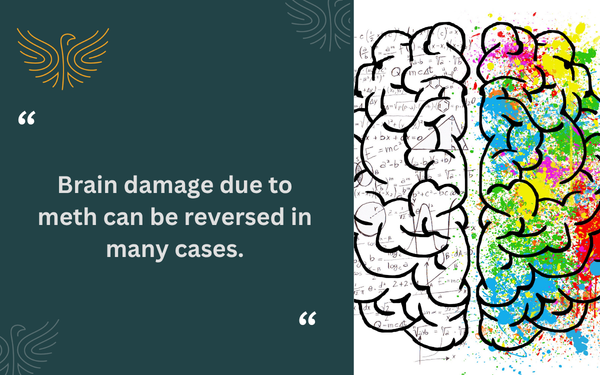
Brain damage due to meth can be reversed in many cases.
When meth repeatedly floods the brain with dopamine, the brain attempts to protect itself. It does this by producing less dopamine on its own and reducing the number of receptors that respond to it.³ However, with recovery, it is possible for the brain to reset; often, it just takes time.⁴
At the same time, high doses and the strain on blood vessels may damage your brain cells or cut off blood flow. In turn, this may lead to permanent damage or brain changes.⁸ Many long-term meth users experience a mix of permanent and reversible damage.
Brain Changes That Often Improve With Time
Here’s a general timeline of how the brain heals during recovery:
- Attention and impulse control: In a UC Davis study, individuals who had been sober for a year or more performed about as well as non-users on a test of focus and self-control.⁵
- Memory and thinking speed: A 2010 study found that individuals who stayed meth-free for about a year performed at levels comparable to a healthy comparison group.⁶
- Mood and emotional distress: Anxiety, low mood, and irritability often decrease with sustained sobriety.⁹
- Sleep, energy, and cravings: These also usually adjust gradually over several months.¹⁰
Interestingly, research tends to suggest that many noticeable healing milestones appear after about one year of sobriety.¹¹ This means that if, after a few weeks or months, there may still be substantial room for improvement, which can be encouraging throughout recovery.
When Brain Damage May Be Lasting
Certain types of brain damage may not be reversible. These may include damage caused by:
- Stroke: Meth raises blood pressure and narrows blood vessels, which can trigger a stroke, even in young adults. Stroke damage may be permanent. However, rehabilitation may help some individuals regain function.⁸
- Overdose, seizures, or extreme overheating: These events can directly injure brain tissue.⁷
- Ongoing psychosis: For some individuals, hallucinations or paranoia continue after they stop using.¹²
- Movement problems: Some research has linked meth use to a higher risk of Parkinson’s disease later in life.¹³
- Some memory and motor effects: After heavy, long-term use, certain skills may only partly return.¹⁴
Reversible vs. Potentially Permanent Brain Damage
What Affects How Much the Brain Can Recover?
No two recoveries look the same. Several factors can shape how much healing is possible, including:
- How long and how heavily you used meth
- Whether you experienced overdoses, strokes, or head injuries
- Whether you also used alcohol or other substances
- Untreated mental health conditions, such as depression or PTSD
- Age and overall physical health
Helping Your Brain Heal
Time is a big part of recovery. Progress may feel slow some weeks. But recovery is still happening, even on the days when it’s hard to notice any changes or improvements in how you feel.¹⁵
At Freedom Recovery Centers (FRC), we understand that reaching out for help can feel like the hardest part. Our caring and compassionate team strives to make things a little easier; our phone line are open 24/7, so we’re ready when you are. Call us at 804-635-3746. We’re more than happy to answer any questions you might have or help you take that first step toward recovery.

.svg)


.svg)


.svg)

